Disclosure: This post contains affiliate links. If you purchase through my links, I may earn a small commission at no extra cost to you. I only recommend products I have personally used or carefully researched.
If you’re just starting out with embroidery, choosing the right embroidery stabilizer for beginners can feel overwhelming — but it doesn’t have to be.
Simply put, stabilizer is the material you place under (or sometimes over) your fabric to keep it steady while you embroider. Without it, fabric shifts, stretches, and puckers under the needle, and even a beautiful design can come out looking uneven or distorted.
The tricky part? There are several different types, and choosing the wrong one is one of the most common beginner mistakes. Here’s a breakdown of each type so you always know which one to reach for.
Cut-away is the most supportive option available. Once you finish stitching, you trim away the excess stabilizer around the design — but a layer stays permanently behind the embroidery to support it.
This is the go-to choice for stretchy fabrics like t-shirts, polo shirts, athletic wear, and anything knit. Because these fabrics move and stretch with wear, they need that permanent support to keep the design looking crisp over time.
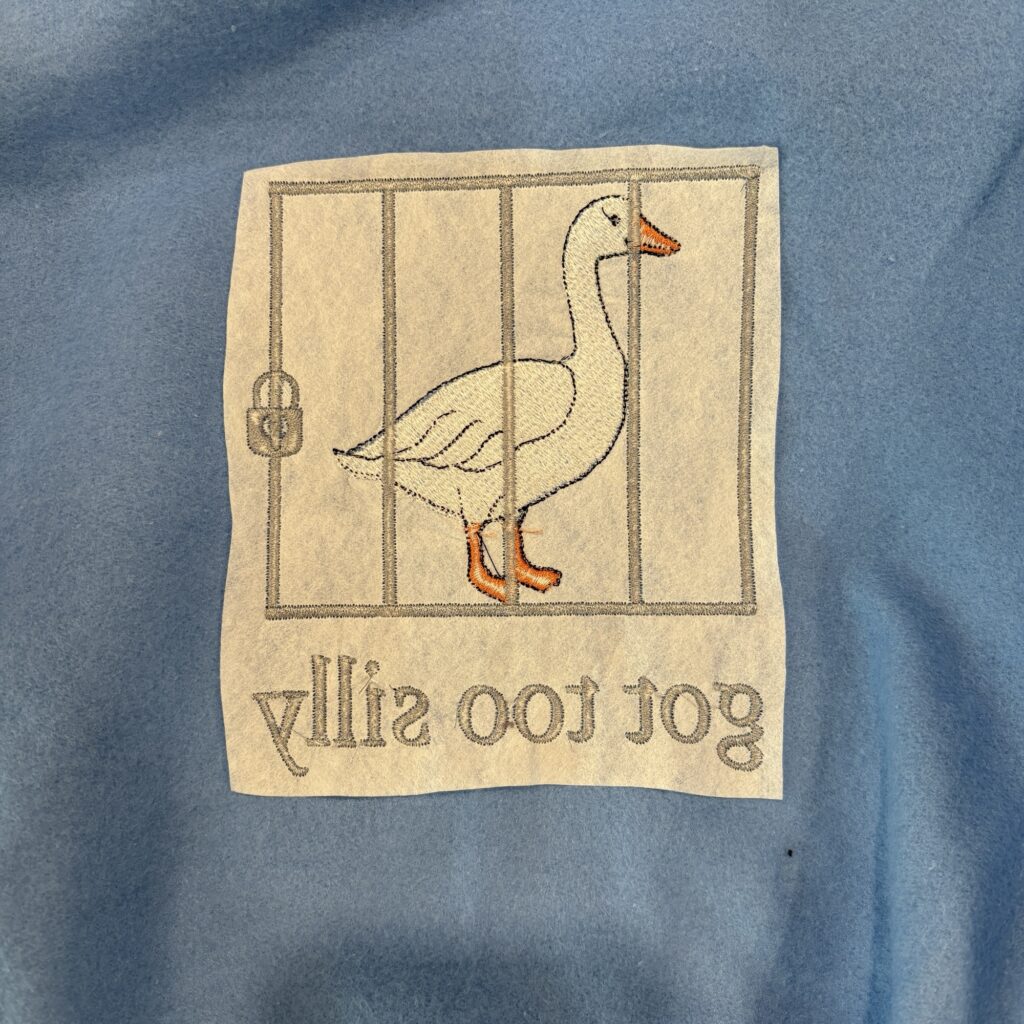
As the name suggests, tear-away is removed by simply tearing it away after you finish stitching. It’s quick, easy, and beginner-friendly.
Tear-away works best on stable, woven fabrics — think cotton, denim, canvas, and linen. The key thing to remember: don’t use it on stretchy fabrics. The pulling motion of tearing can distort your stitches and warp the design.
Wash-Away (Water-Soluble) Stabilizer
Wash-away stabilizer dissolves completely in water, leaving no trace behind. This makes it ideal for delicate or sheer fabrics where you don’t want any stabilizer visible or remaining in the finished piece.
It’s also the stabilizer of choice for freestanding lace — designs that are stitched entirely on stabilizer with no fabric at all, creating a lacy, open effect once the stabilizer washes away.
I personally use cut-away stabilizers in both black and white, and I keep three sizes of wash-away (Solvy) on hand — 5″, 8″, and 10″ — which covers almost every project I work on.
A handy bonus: wash-away also works beautifully as a topping (more on that below) on textured fabrics.
Topping is a bit different — it goes on top of your fabric rather than underneath. Its job is to prevent stitches from sinking down into the texture of the fabric, which can make a design look flat or get lost entirely.
You’ll want to use topping on fabrics with any kind of pile or nap: towels, fleece, minky, velvet, and similar materials. A layer of wash-away stabilizer on top works perfectly for this purpose — just stitch through it and rinse it away when you’re done.
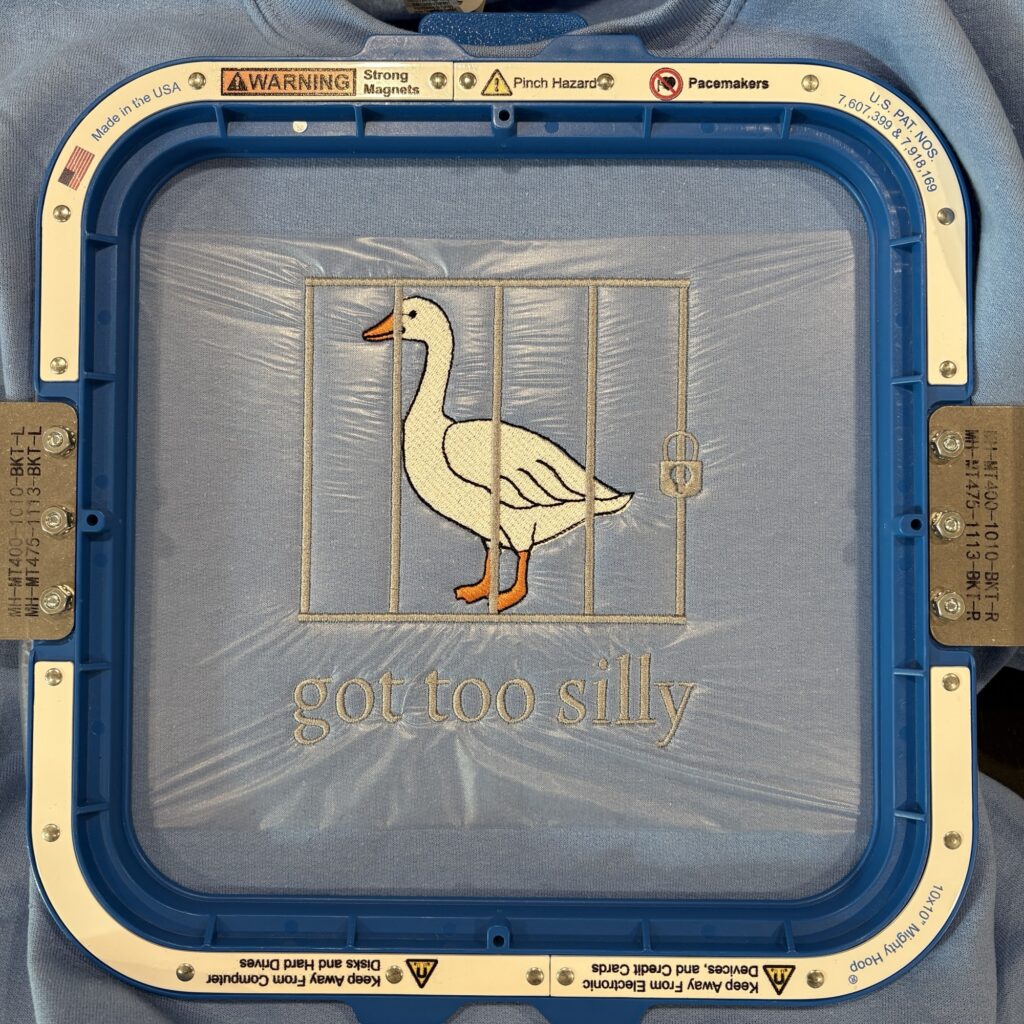
Heat-away stabilizer disappears when you apply heat from an iron or heat tool. It’s a good option when you can’t use water (on heat-sensitive fabrics, for example) and don’t want any stabilizer left behind.
It’s less commonly used than the other types, but it’s great to have in your toolkit for specific situations.
A Quick Rule of Thumb
When in doubt, ask yourself two questions:
- Is my fabric stretchy? → Reach for cut-away.
- Is my fabric textured or fluffy? → Add a topping.
For everything else, tear-away is usually a safe starting point.
Choosing the right stabilizer won’t just improve how your embroidery looks — it’ll make the whole process smoother and less frustrating. Once you get a feel for matching stabilizer to fabric, it becomes second nature!
Have a question about stabilizers or a fabric you’re not sure about? Drop it in the comments — I’d love to help!